Menu

Call This Wednesday to Get $25 OFF

The Anatomy of a Safe Stairway: Code-Compliant Handrails, Rises, and Treads
04/Sep/2026

A staircase may look fine yet still have uneven risers, shallow treads, loose handrails, or awkward spacing from one step to the next. Small differences like these can make the stairs harder to use, especially for children, older adults, or anyone carrying items between floors. Mr. Handyman offers stair repair and other home improvement services for worn or damaged stair components. Below, we’ll look at the main features of a safer stairway and why consistent dimensions and proper handrail placement are so important.

The Anatomy of a Safe Stairway: Code-Compliant Handrails, Rises, and Treads

Why Consistent Stair Dimensions Matter

Most people don't look down and measure every step as they climb a staircase. Their body quickly learns the pattern instead. Once the first few steps establish a certain rise and depth, the person expects the rest of the flight to follow the same rhythm. One noticeably taller riser or shorter tread interrupts that pattern and increases the chance of catching a toe or misplacing a foot.

A loose tread, damaged nosing, or old repair that changed the height of one step can affect the way people use the staircase. Carpet replacement and new flooring at a landing can cause the same issue if the finished floor height changes. Staircases should be checked from top to bottom. The visible damage may be limited to one step, or it may be part of a larger issue caused by an earlier remodeling project. Measuring the full flight helps show whether a focused repair is enough.

Understanding the Role of Risers and Treads

The riser determines how high your foot travels from one step to the next. The tread provides the horizontal surface where your foot lands. Those two dimensions work together, so changing one affects how the staircase is used. Tall risers demand a higher step, while shallow treads leave less space for the foot.

Age shows up in stair treads in several ways. Wood can crack around old nails and screws, the front of a tread can wear thin, and boards can begin working loose from the framing underneath. Carpet sometimes keeps these problems out of sight until a step starts to move. When that happens, driving another screw through the top isn't necessarily a repair. The tread may be loose because the wood or its connection to the framing has failed below.

Our Services

Explore our expert services designed to improve and maintain your home with precision and care.

TV Mounting

Technological advancements over the years seem to make things bigger, and TV sets are…

Step & Stair Repair

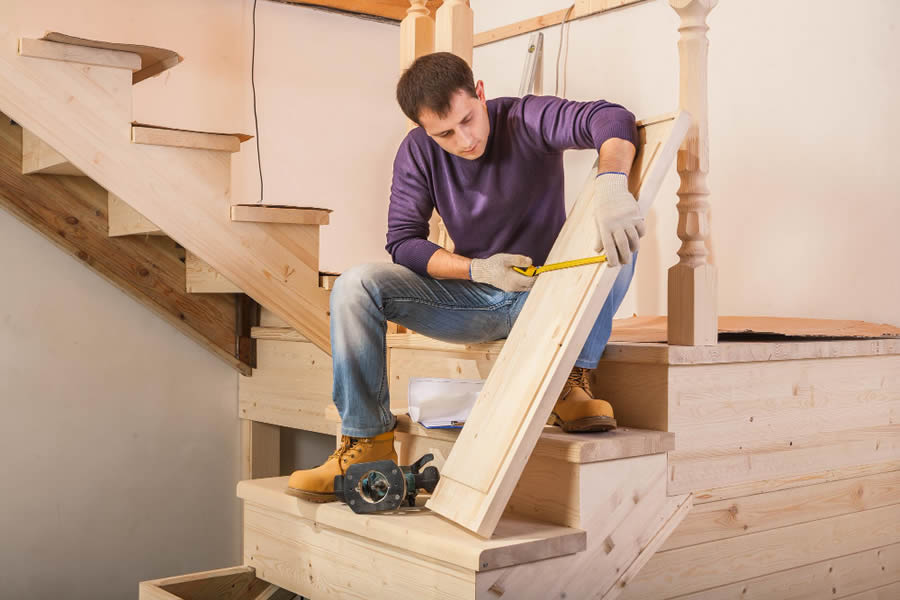
As a seasoned home improvement company, Mr. Handyman understands the importance of a well-maintained…

Railing Repair and Installation

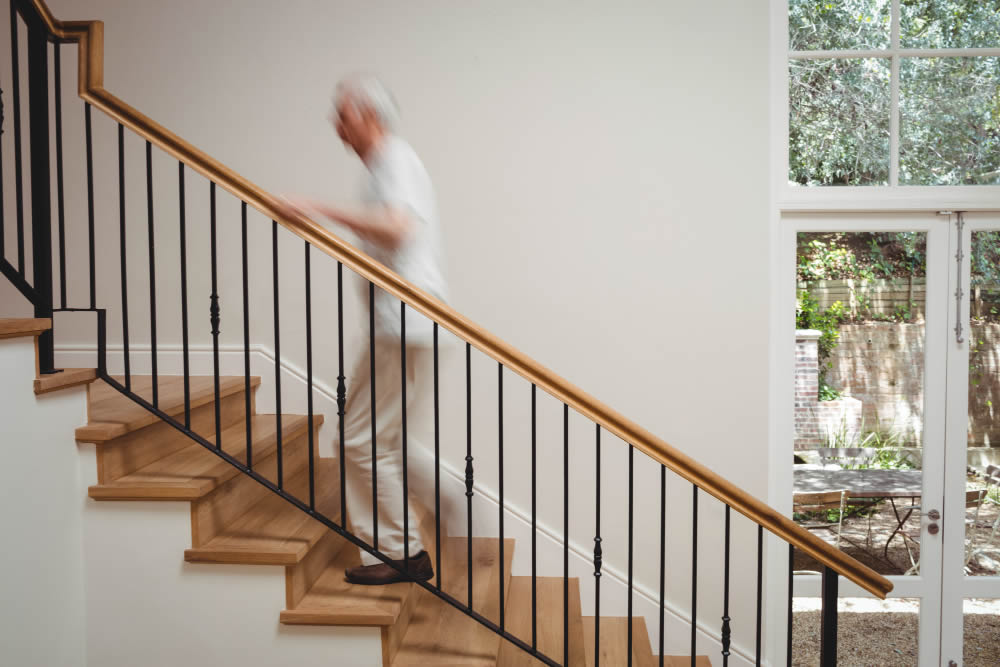
At Mr. Handyman, we understand the vital role stair railings play in the appearance,…

Mailbox Repair & Installation

Your mailbox is not just a place to receive mail, but the first impression…

Caulking

Do you have a home renovation scheduled? If so, caulking offers an effective solution…

One bad tread can usually be dealt with on its own when the surrounding stairs are solid. Replacing that board or repairing a loose part is a much different job from rebuilding a staircase. But if several treads flex, the steps aren't uniform, or the framing underneath has begun to fail, the trouble is no longer confined to one piece. The staircase may need to be opened up and repaired more extensively.

Handrail Height, Grip, and Placement

The handrail becomes most noticeable when someone needs it. A child reaches for it while learning the stairs. A person carrying laundry uses it on the way down. After an injury, surgery, or change in mobility, a secure rail becomes an essential part of getting from one floor to another.

A decorative rail may look good but not work well as a handrail. If it’s too wide to grip securely, it doesn’t provide the same support. Loose brackets are another problem. If the rail moves when someone leans on it, the fasteners, mounting surface, or rail itself needs to be checked. Simply tightening a screw into damaged material won’t make the attachment secure again.

Sometimes, staircases have partial rails that stop before the top or bottom of the flight. Others rely on a wide decorative cap that wasn't designed as a graspable handrail. An experienced handyman in Pennington can inspect the setup and check to see if parts need to be repaired or replaced as part of a larger home improvement plan.

Loose Steps, Worn Edges, and Other Common Hazards

Stair problems aren’t limited to loose boards. A worn nosing can reduce the usable front edge of the tread, while loose carpet can catch a shoe. Cracks, raised fasteners, damaged trim, and movement underfoot should also be checked. Outside, rain and temperature changes put more stress on the materials, especially wood and the connections holding the stairs together.

Good lighting is part of the equation as well. Stair users need enough light to see where each tread begins and ends. The IRC includes provisions for residential stairway illumination, but local code determines the exact requirements. Even a sound staircase can become harder to use after dark if a fixture is burned out or badly positioned.

The first step in a stair repair is figuring out what went wrong. A cracked exterior board may have failed because water has been reaching the wood, while a tread that won't stay tight could have deteriorated around the fastener. Replacing the board or adding another screw may make the stair look repaired for the moment, but the same problem can return if its cause is left alone.

When Existing Stairs Need More Than a Minor Repair

One loose tread and an entire staircase with inconsistent dimensions aren't the same project. The first problem might involve a focused repair. The second requires measurements, evaluation of the supporting structure, and a closer review of the applicable code before work begins.

Some stair problems don’t show up until the surrounding materials are removed. Carpet may be hiding cracked treads, and new flooring can change the finished height at the top or bottom landing. Opening a wall may uncover loose framing or weak connections. Once those problems are visible, a repair that seemed small can turn into a bigger job.

Past repairs can tell you quite a bit about a staircase. If the rails have come loose, several treads have been patched, and the steps still move underfoot, another small repair may not get to the root of it. There could also be uneven steps or weak connections that aren't obvious until more of the staircase is inspected.

Does Your Worn Stairway Need an Upgrade?

Stairs get used every day, and even small problems can make them uncomfortable or unsafe. A tread that shifts, an uneven step, or a handrail that doesn't feel secure is worth fixing before the problem gets worse. If you've noticed loose treads, damaged edges, uneven steps, or a handrail you can't depend on, call Mr. Handyman to schedule a repair.


Share on :
Blogs

Our Latest Updates & Blog Posts

Restoring Historic Mercer County Character: Repairing Original Hardwood Floors
Oct 03

Restoring Historic Mercer County Character: Repairing Original Hardwood Floors

Scratches, loose boards, worn finish, and small areas of damage can make an original hardwood floor look tired even when much…

Read More
Water-Damaged Drywall: How to Spot Structural Damage Before It Spreads
Sep 26

Water-Damaged Drywall: How to Spot Structural Damage Before It Spreads

A brown stain on the wall might not seem like a big problem at first. Then the drywall starts to soften,…

Read More
Splinters, Cracks, and Fading: How Sanding and Sealing Double Your Deck's Lifespan
Sep 19

Splinters, Cracks, and Fading: How Sanding and Sealing Double Your Deck's Lifespan

You shouldn’t have to watch where you put your feet every time you walk across the deck. Splinters, rough boards, raised…

Read More
The Small Bathroom Lighting & Mirror Trick: Creating the Illusion of Space
Sep 12

The Small Bathroom Lighting & Mirror Trick: Creating the Illusion of Space

A small bathroom can feel cramped even when the layout is functional, and poor lighting or an undersized mirror can make…

Read More