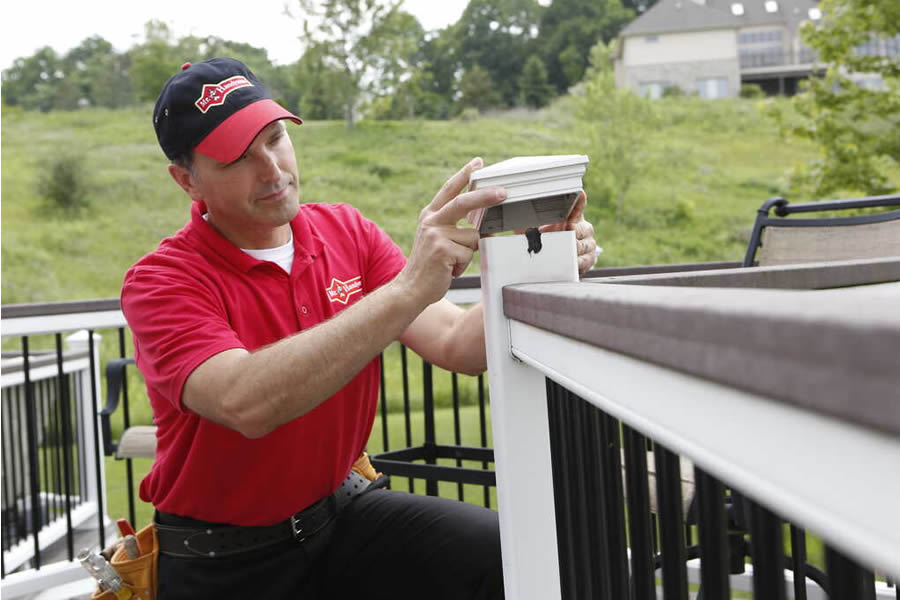
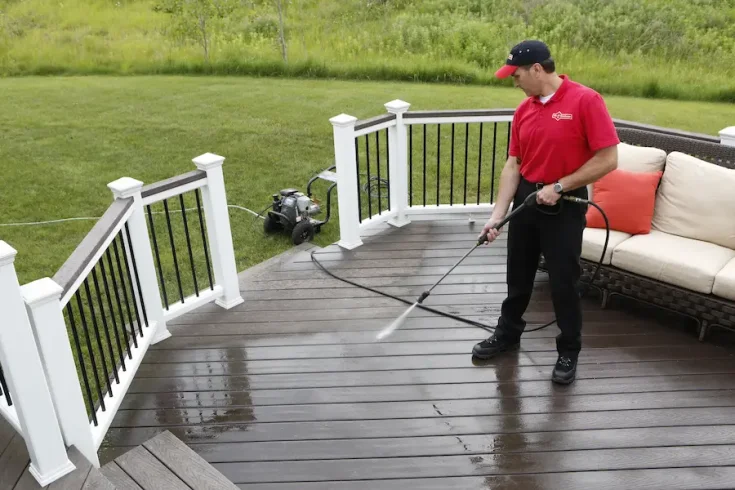
Material choice is important. Pressure-treated pine costs less upfront but requires regular sealing to prevent moisture absorption. Composite decking costs more initially but resists rot, splinters, and UV fading without annual maintenance. If you're replacing a section rather than the whole surface, matching the existing material keeps the deck looking uniform.
If your existing boards are fastened with face screws, the replacements go in the same way. If the original deck used hidden fasteners, a handyman in Montgomery will need to verify that the joist spacing is compatible before installing. Skipping that check leads to gaps or boards that don't sit flush.
How to Check the Condition of Your Posts, Beams, and Joists
Posts are the vertical members that transfer the deck's weight down to the footings. Check them at the base, where they meet the ground or post cap, and look for soft spots, discoloration, and visible cracking along the grain. Posts that show severe rot at the base can sometimes be sistered or replaced individually without touching the rest of the structure.
Beams run horizontally and carry the load from the joists to the posts. Check the ends first because that's where moisture collects and rot usually starts. A beam that's solid through its middle but rotting at one end may still be salvageable with a partial repair, though a professional should confirm that before any work begins.
Joists are the repetitive framing members that run perpendicular to the decking. Crown them with your eye from one end to look for sagging or bowing. Check the joist hanger connections for rust and the joist faces for soft spots. In many deck repair scenarios, one or two compromised joists can be sistered with new lumber without pulling up the entire frame.
How Weatherproofing and Sealing Extend the Life of a Repaired Deck
Sealing a deck afterward is what keeps the repair from failing early. Bare wood that's left exposed to rain and UV breaks down at the surface and absorbs moisture into the grain. The moisture cycles through the wood with temperature changes and accelerates the same rot process you just fixed.
A quality deck sealant or stain-sealant combo creates a barrier that slows this process down. Water-repellent sealers work well on newer wood. Penetrating oil-based stains protect while adding color, which is useful when new boards don't yet match the weathered look of existing ones. The right product depends on whether your decking is new pressure-treated lumber, aged wood, or composite.
Getting a Professional Assessment Before You Decide
Walking a deck with a trained eye takes less than an hour and produces a clear picture of what's damaged, what's borderline, and what's fine. A professional assessment tells you whether you're looking at board replacement, targeted structural repairs, or a rebuild. Skipping this step and guessing leads to either overspending on a full replacement or underspending on surface repairs that don't take care of what's underneath.
A quality inspection covers the decking surface, framing, ledger connection, post footings, and railing system. Each component gets evaluated separately, so the repair scope is specific. You end up with a list of what needs attention now and what can wait, which makes budgeting a lot more predictable.
Deck repair is a category of home improvement where early action costs less than delayed action. A joist with early-stage rot that gets sistered this season is a manageable repair. If the same joist is left another two years, it may take surrounding framing with it, which changes both the scope and the cost.
Are You Ready to Get Your Deck Fixed?
Contact Mr. Handyman today to schedule a professional deck assessment. A trained technician will walk your deck, identify what's structural and what's cosmetic, and give you a clear repair plan. Our team provides reliable workmanship, consistent scheduling, and a thorough inspection beforehand so you know exactly what you're getting before the first board comes up.