Vinyl handles moisture at the surface level without absorbing it, but that doesn't mean water damage is impossible. Water that gets beneath luxury vinyl plank through gaps at the edges or around transitions can sit on the subfloor, grow mold, and compromise the adhesive bond or the floating floor's stability. The repair for this is different because you're focusing on what's underneath, not the plank, which may come up undamaged and go back down after the subfloor dries.
This is one of the biggest areas where floor repair goes wrong without a professional assessment. Homeowners see a buckled laminate plank and replace just that plank, without drying the subfloor or finding the moisture source. Within weeks, the new plank buckles too. An experienced handyman will locate the source, assess the subfloor, and dry it before doing anything else.
Fixing Scratches and Scuffs on Laminate Without Replacing Planks
Surface scratches on laminate don't always require a full plank swap. The wear layer determines how far the damage goes. A light scuff that hasn't broken through the wear layer can be taken care of with a laminate repair kit, which typically includes colored putty sticks or wax fillers matched to the floor's color. You press the filler in, let it harden, and buff the excess flush with the surface.
Deeper scratches that cut through the wear layer into the photographic layer are trickier. The image beneath the wear layer doesn't get repaired; it just gets covered. A color-matched filler can camouflage the damage well in low-traffic areas, but in a high-traffic zone, the repair wears down faster than the surrounding floor and becomes visible again within months.
For gouges that reach the fiberboard core, replacement is the better call. Exposed fiberboard absorbs moisture from mopping, humidity, and spills, which means a gouge creates a future swelling problem. A professional handyman will check the depth before recommending a solution, because applying filler over a compromised core doesn't solve the vulnerability.
Tools and Products That Work for One Material but Damage the Other
The product overlap between laminate and vinyl repair is smaller than most packaging suggests. These are the main distinctions:
- Heat Guns: Used in controlled settings to lift and re-bond vinyl plank edges. Applied to laminate, even briefly, they blister the wear layer and warp the fiberboard beneath it.
- Solvent-Based Adhesives: Appropriate for some vinyl repairs, particularly glue-down sheet vinyl. They dissolve the laminate's top layer and compromise its locking joints.
- Wax-Based Fillers: Work well on laminate scratches. On vinyl, they don't bond properly to the plastic surface and flake out within weeks.
- Pull Bars and Tapping Blocks: Standard for both materials, but the force used matters. Vinyl planks crack under the same mallet pressure appropriate for laminate installation.
- Steam Mops for Post-Repair Cleaning: Damaging to laminate regardless of the repair type. Vinyl tolerates steam at the surface but should still avoid prolonged exposure at seams.
This is the category where home improvement stores do homeowners a disservice. Packaging that says "works on all hard floors" rarely accounts for the difference between a wood-core product and a plastic-core one. Applying the wrong product can create a second repair job. A professional floor repair assessment includes material identification precisely because the wrong tool can lead to a full section replacement.
Get the Right Repair the First Time
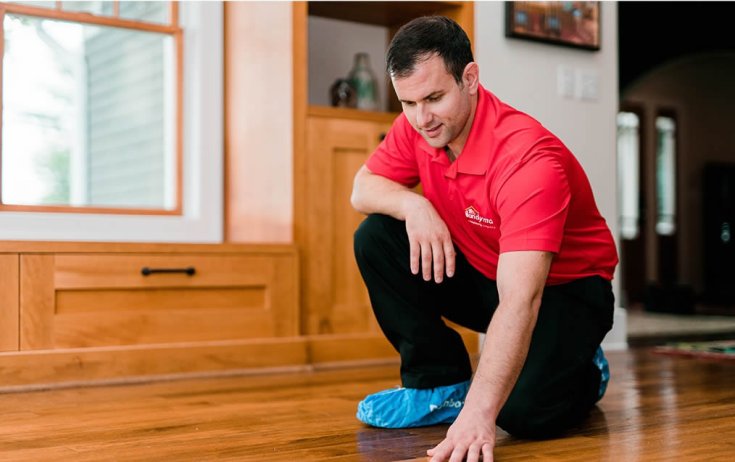
Laminate and vinyl each have a specific repair method, and a short list of products that work on them without causing additional damage. Treating them as interchangeable leads to wasted materials, repeat repairs, and in some cases, subfloor damage that drives up the total cost. If you're looking at a damaged floor and you're not certain what you have or how deep the damage goes, skip the guesswork. Mr. Handyman's technicians can inspect the material, the damage depth, and the subfloor condition before recommending a repair. Contact us today to schedule a floor repair assessment.