Springs lose tension as they age. A spring that once held the stairs in a controlled descent now lets them drop too quickly or refuses to lift them back into place without a fight. You end up muscling the stairs open or shut, which puts stress on the frame and increases the chance of something giving way at the wrong moment.
Wood treads crack or split along the grain, especially in older units made from pine or other softer species. The damage isn't always visible from above. A tread can look intact but have a hairline fracture running underneath that spreads a little more with each use until it finally snaps. Hardware rusts, screws strip out, and brackets bend, all of which compromise the structural integrity.
Tread Wear and Grip
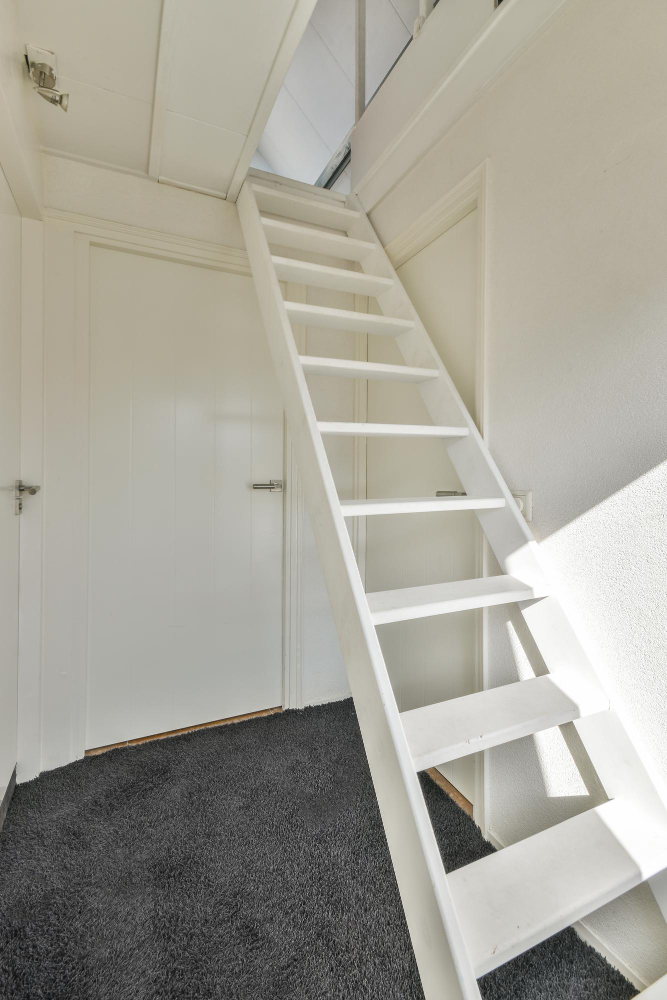
Bare wood treads turn slick when dust settles or when you're wearing socks. Even a small amount of moisture from your shoes after walking in from the garage can make the surface slippery. Treads without any texture or grip tape are a liability, especially on the steep angle attic stairs require.
Worn treads develop depressions where feet land most frequently. The center of each step gets compressed and polished, which creates a shallow bowl shape. Your foot doesn't sit flat anymore. It rolls slightly toward the middle, which affects your balance and makes it easier to miss the edge on your way down.
Adding grip tape or textured strips to each tread solves the traction problem without requiring a full replacement. Skipping this step because the stairs haven't caused a fall yet could result in an ER visit when you're rushing to grab something.
When Repair Is Enough and When Replacement Makes More Sense
A single loose hinge or a stripped screw is a simple fix. Replacing hardware, tightening bolts, and reinforcing attachment points can extend the life of an attic ladder repair by years. If the frame is square, the springs still have tension, and the treads are solid, repair makes sense.
If you have multiple issues stacking up, like loose hinges, cracked treads plus a bent support arm, it's time for a replacement. Fixing one problem won't take care of the wear across the whole system. At some point, you're putting money into something that's reached the end of its service life.
Weight capacity matters as well. Older units were rated for 200 or 250 pounds. Modern codes and manufacturer standards push that closer to 300 or 375 pounds. If your household needs exceed what the stairs were built to handle, no amount of repair will make them safe. You need a unit designed for the load you're asking it to carry.
How to Add Safety Features to an Older Attic Stair System
Handrails can be retrofitted to most attic stair models. A handyman in Ewing, NJ can install a rail along one or both sides of the stairs, anchored into the ceiling joists or the stair frame. The rail doesn't need to be fancy. It just needs to be secure enough to catch your weight if you start to slip.
Motion-activated lighting removes the guesswork when you're opening the stairs in a dark hallway. Battery-powered LED strips with adhesive backing stick to the underside of the attic opening or along the stair treads. You don't need an electrician to run new wiring. The lights turn on when you approach and shut off after you're done.
Some attic stair systems allow you to add a locking mechanism or an assist pole that extends from floor to ceiling and gives you something to hold onto while you unfold the stairs or climb the first few steps. A lock keeps the stairs from being opened by children or from dropping unexpectedly if the latch fails. Both features are available as aftermarket additions for most standard models.
Do You Need Help With Your Next Home Improvement Project?
If your attic stairs wobble, creak, or require extra effort to open and close, call a professional. A dependable handyman can help determine if you need minor repairs or a full replacement and should be able to complete the work in a few hours. Don't wait until the stairs give out mid-climb. Schedule an inspection, get the repairs done, and cross one more hazard off your home improvement list.