Rot at or below ground level is a different story. If the base of the post crumbles when probed, the post needs to come out. Trying to stabilize a rotted post with concrete just locks the problem in place and delays an inevitable failure. Check how deep the rot extends. Rot that's limited to the bottom six inches might allow for a sister post repair, where a new post is set adjacent so the load transfers. Rot that runs a foot or more up the post needs a full replacement.
For a concrete removal decision, posts set in solid concrete require breaking out the old footing before resetting, which adds time and effort. Posts set in gravel-packed holes are easier to pull and reset. Either way, new posts should be rated for ground contact. Look for pressure-treated lumber marked UC4B for in-ground use.
The Right Materials and Fasteners for a Long-Lasting Wood Fence Fix
The wood and hardware you use on a repair determine how long that repair holds. Mismatched materials fail faster than the original fence, and it happens more than most people expect. Pressure-treated lumber contains preservatives that react with standard steel fasteners. The reaction corrodes the metal and stains the wood within a season or two.
Use hot-dipped galvanized or stainless steel fasteners on any pressure-treated lumber. For cedar or redwood repairs, the same rule applies. Ring-shank nails hold better than smooth-shank nails in wood fences because the rings grip the wood fiber rather than relying on friction alone. For rail connections and post caps, exterior-rated structural screws outperform nails. They're easier to drive, they don't work loose with seasonal wood movement, and they're far easier to remove if you need to make another repair down the road.
Match your repair wood to your existing fence material as closely as possible. Mixing cedar rails with pine pickets creates uneven weathering and makes the repair visible for years. If you can't source matching lumber, plan to refinish the entire fence section after repairs so the color and grain blend. This is one of those home improvement details that separates a repair that holds its value from one that simply holds together.
How to Protect What You've Repaired
Bare wood that's left unprotected after a repair starts absorbing moisture almost immediately. New lumber and freshly cut ends are especially vulnerable because the factory finish, if any existed, is gone. Sealing the repair within a week of completing it is the target window.
For pressure-treated posts and framing, a penetrating oil-based wood preservative applied to cut ends before installation adds protection at a low cost. For pickets, rails, and visible fence boards, a semi-transparent exterior stain provides UV protection and moisture resistance without hiding the wood grain. Solid stains and paints offer more coverage but can trap moisture if applied over wood that isn't fully dry, which causes peeling within a season. Let new lumber acclimate and dry for at least 30 days before applying a solid finish.
Reapplication schedules vary by product, but most exterior stains on wood fences need attention every two to three years. A quick inspection each spring tells you where to focus. Look for areas where the finish has gone chalky, lifted, or worn through. A handyman with the right equipment can handle the prep, application, and cleanup far faster than a DIY weekend project allows, and the results hold longer when the surface preparation is done right.
When It's Time to Call for Help
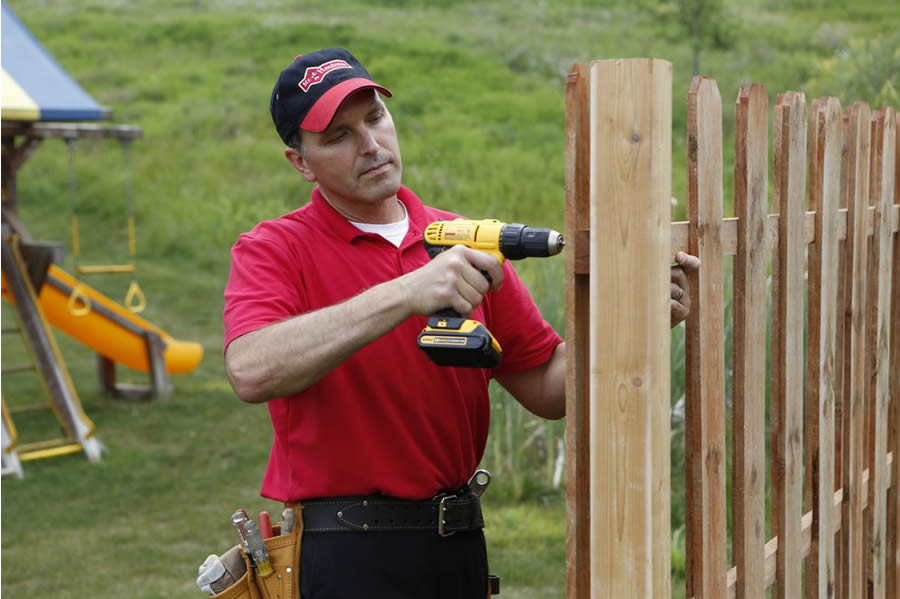
Most fence repairs are manageable for a motivated homeowner with basic tools. But when rot has spread across multiple sections, when posts are failing at the footing level across a run of fence, or when the repair requires precise leveling and alignment, the job scales up quickly. Mr. Handyman offers reliable fence repair as part of a full range of home improvement services. Our crew can fix your fence and also take care of related issues around your property in the same visit. If your fence needs attention, don't let it sit. Contact us and schedule an appointment.