Once the soil is saturated, water starts moving horizontally. It presses against foundation walls, seeps into hairline cracks, and follows gaps in mortar or concrete. Hydrostatic pressure builds as water-saturated soil expands and pushes inward against the wall. On poured concrete foundations, this shows up as seepage. On block foundations, mortar joints deteriorate faster from sustained moisture exposure.
The freeze-thaw cycle makes this worse in colder climates. Water that penetrates small cracks expands when temperatures drop below freezing and widens the cracks incrementally. Each season of poor drainage accelerates structural deterioration.
How Soil Saturation Around Your Foundation Leads to Structural Problems
Soil that’s directly adjacent to a foundation behaves differently from undisturbed ground. Builders typically backfill the zone with loose soil after construction, which drains poorly and compacts unevenly. Add sustained moisture from overflowing gutters, and the soil shifts.
Saturated soil loses its load-bearing capacity. When the ground beneath a portion of your footing softens, that section of foundation can settle independently of the rest. Differential settlement is one of the leading causes of stair-step cracks in brick veneer, diagonal cracks at window corners, and doors or windows that stick or no longer latch correctly.
Clay-heavy soils expand when wet and contract when dry, which creates a cycle of pressure and release against foundation walls. This movement is slow but cumulative. A professional home improvement contractor inspecting a basement with horizontal cracks will frequently trace the problem back to years of unchecked moisture at grade level, starting with gutters.
Signs Your Foundation Has Already Been Affected by Poor Drainage
You don't need a structural engineer to spot early warning signs. Several visible indicators point to drainage problems at the foundation level:
- Stair-step cracks in brick or block along mortar joints
- Diagonal cracks running from the corners of windows or doors
- Horizontal cracks in poured concrete or block walls
- Efflorescence, which is a white chalky residue left on concrete or block after water evaporates through the wall
- Musty odors in the basement or crawl space during or after rain
- Water stains on basement walls at or near floor level
- Doors on the main floor that have recently begun sticking
Any one of these signs warrants a closer look. Two or more appearing together indicate an active drainage problem. A professional handyman or foundation specialist can assess early-stage damage and help you determine whether the fix is a drainage correction or something more involved. Getting eyes on the problem quickly limits how far it progresses.
How Often Should Gutter Cleaning Be Scheduled to Prevent Damage
The standard recommendation for most homes is twice per year. Once in late spring, after tree seeds and blossoms have finished falling, and once in late fall, after most leaves have dropped. Homes with mature trees overhead may need cleaning three or four times annually. A few conditions push the frequency higher:
- Pine Trees Nearby: Pine needles mat together and block downspouts faster than broadleaf debris
- Asphalt Shingle Roofs: Granule buildup accumulates in gutters and restricts flow
- Valley-Style Rooflines: These concentrate debris in specific sections and clog faster than simple gable designs
- Single-Story Homes: Lower gutters collect windblown debris from surrounding landscaping more often
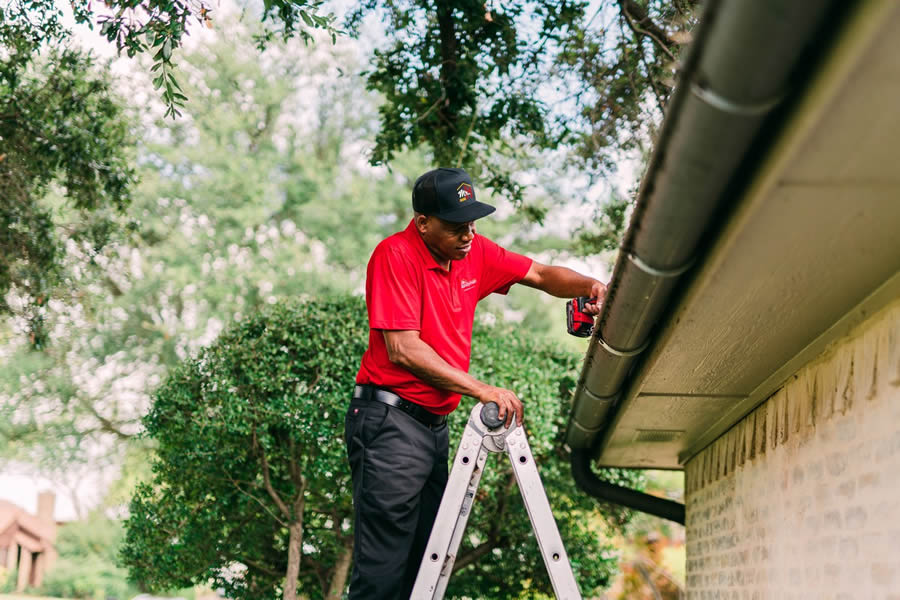
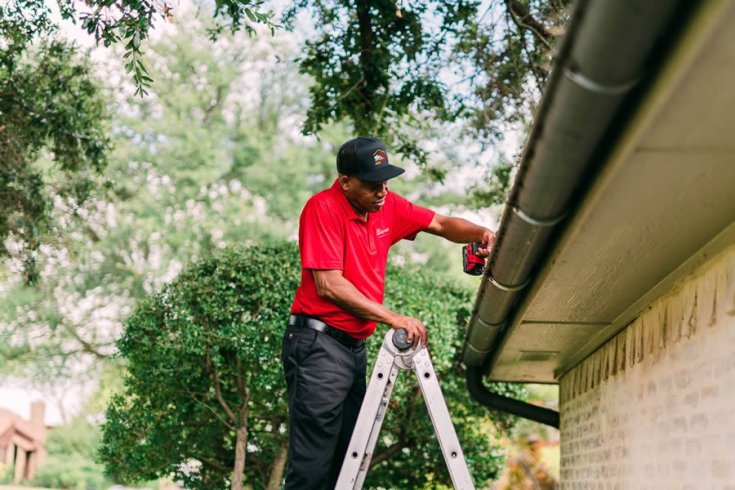
Gutter cleaning is a home improvement task homeowners can handle themselves if they're comfortable on a ladder and have the right equipment. For two-story homes, steep rooflines, or gutters with serious buildup, hiring a local handyman is the safer option. A professional will clear the troughs, flush the downspouts, check the slope, and confirm the downspout extensions are directing water far enough from the house.
Schedule gutter cleaning before the heavy rain season to keep your drainage system working when it matters most. Waiting until you notice an overflow may mean damage has already started.
Keep Your Gutters Clear and Your Foundation Dry
Clogged gutters put your foundation at risk. Schedule a gutter cleaning twice a year, take care of any existing signs of foundation moisture now, and make sure your downspout extensions discharge water far enough away from the house. If you've noticed any of the warning signs listed above, have a professional take a closer look before the next rainstorm arrives. Mr. Handyman offers gutter cleaning and a full range of home improvement services to help homeowners protect their investment. Contact us today to schedule your next service.